
The Science of Rock Paper Scissors
Physicists, psychologists, biologists, and computer scientists have all studied this game. They found things.
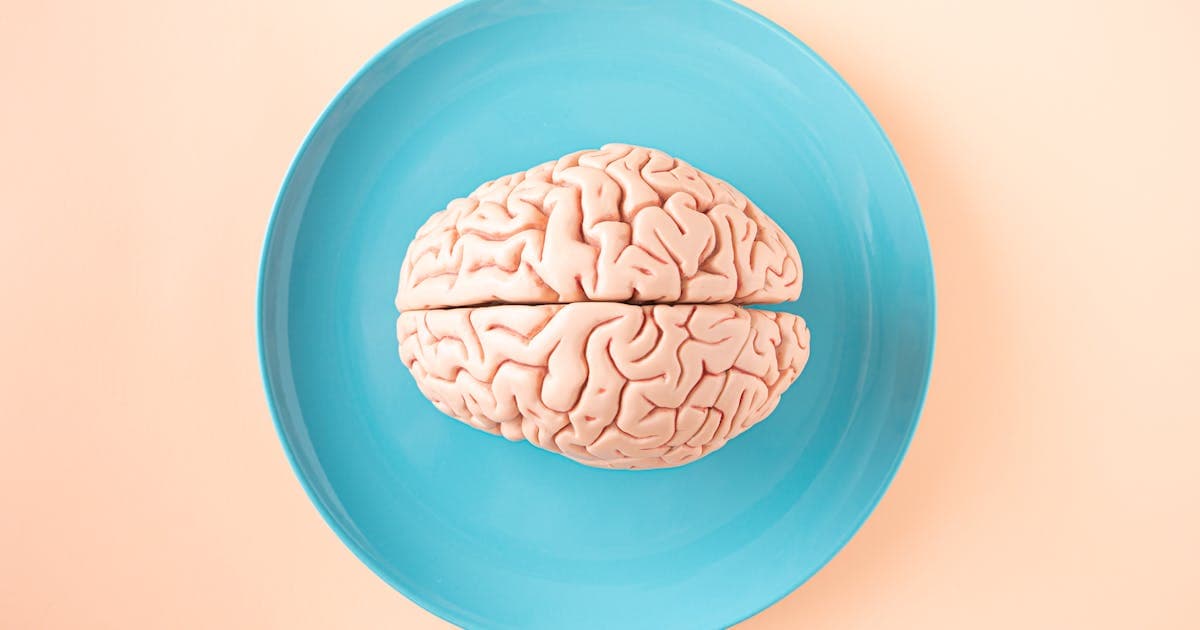
Yes, This Is a Real Field of Study
Rock Paper Scissors has been the subject of dozens of peer-reviewed academic papers. Universities from Beijing to London use RPS as a model system for studying human decision-making, social behavior, and strategic thinking. People got PhDs for this. We are not joking. They are not joking.
The Zhejiang University Study (2014)
One of the most cited RPS studies came from Zhejiang University in China. Researchers had 360 students play 300 rounds each and tracked every single throw. Here's what they found:
- Win-Stay: Players who won a round tended to repeat the same gesture next round. If Rock worked, Rock it is again. Why fix what isn't broken, right? This is exactly what makes it broken.
- Lose-Shift (Cyclical): Players who lost tended to switch to the gesture that would have beaten their losing throw, following a Rock to Paper to Scissors cycle. The human brain apparently thinks the answer to losing with Rock is trying Paper, not randomizing.
- Draw-Shift: After a tie, players tended to switch. Ties feel boring, and boring makes people restless.
These patterns, called conditional response strategies, deviate significantly from the Nash equilibrium (random 1/3 each). They also create exploitable patterns. If you know your opponent follows Win-Stay, you know what's coming after they win. It's like they're handing you the answer sheet.
The Rock Bias
Multiple independent studies have confirmed that Rock is the most commonly thrown gesture, appearing roughly 35-37% of the time versus the expected 33.3%. Why?
- Physical default: A fist requires no finger movement. It's the resting state of a hand. Under time pressure, people default to the thing that requires the least effort. This is also how most decisions in life work.
- Psychological associations: Rock feels strong and aggressive. Male players throw Rock even more frequently, suggesting the hand gesture carries emotional weight.
- First-throw bias: Rock dominance is strongest on the first throw of a match, before strategic thinking kicks in. The first throw is basically your subconscious introducing itself.
Evolutionary Biology
Here's where it gets weird. RPS dynamics appear in actual nature:
- Side-blotched lizards (Uta stansburiana): Three male morphs compete for mates in an RPS cycle. Orange-throated (aggressive) beats blue-throated (cooperative), blue beats yellow-throated (sneaky), yellow beats orange. These lizards are playing competitive RPS and they don't even know it. They don't even have hands.
- Bacteria: E. coli strains that produce toxins, resist toxins, and are vulnerable to toxins coexist through non-transitive dominance. Bacteria play RPS. This is not a metaphor.
- Coral reef fish: Competitive dynamics between coral species follow RPS-like hierarchies. The ocean is basically one big, wet tournament.
Evolutionary game theorists use these examples to demonstrate that non-transitive competition promotes biodiversity. No single strategy dominates, so multiple strategies coexist. RPS isn't just a game. It's a fundamental pattern of how living things share space without one thing winning forever.
Artificial Intelligence
AI systems trained to play RPS against humans consistently win. Not because they're smarter, but because humans are predictable and refuse to admit it:
- Iocaine Powder (2000): One of the earliest successful RPS bots, which won the first International RPS Programming Competition. Named after a poison from The Princess Bride, which is exactly the kind of naming convention you'd expect from people who program computers to play Rock Paper Scissors.
- University of Tokyo robot (2012): Using a high-speed camera, this robot detected the opponent's hand shape in the first milliseconds of its formation and responded with the winner in under 1/1000th of a second. It had a 100% win rate. It was also cheating. But it was very cool cheating.
- Deep learning models: Modern neural networks can predict a human's next throw with about 60% accuracy (versus the 33% baseline). They learn your patterns faster than you learn that you have patterns.
Neuroscience
Brain imaging studies have shown that an RPS decision activates multiple regions simultaneously:
- Prefrontal cortex: Strategic planning. "What do I think they'll throw?"
- Anterior cingulate cortex: Conflict monitoring. "Am I overthinking this?"
- Temporal lobe: Pattern recognition. "They've thrown Rock twice."
- Motor cortex: Hand gesture preparation, which can be detectable as tells. Your brain starts forming the gesture before you consciously decide, which is both fascinating and slightly unsettling.
Applications Beyond the Game
RPS research has practical applications that have nothing to do with playing RPS:
- Behavioral economics: Understanding how humans make decisions under uncertainty
- Security: Designing systems robust against predictable human behavior
- Education: Teaching probability, game theory, and statistical thinking
- Auctions and mechanism design: Fair allocation procedures based on non-transitive systems
The simplest game in the world keeps teaching us new things. That's the kind of overachievement you have to respect.