
What Is Rock Paper Scissors?
Played by billions. Understood by everyone. Mastered by, honestly, very few.
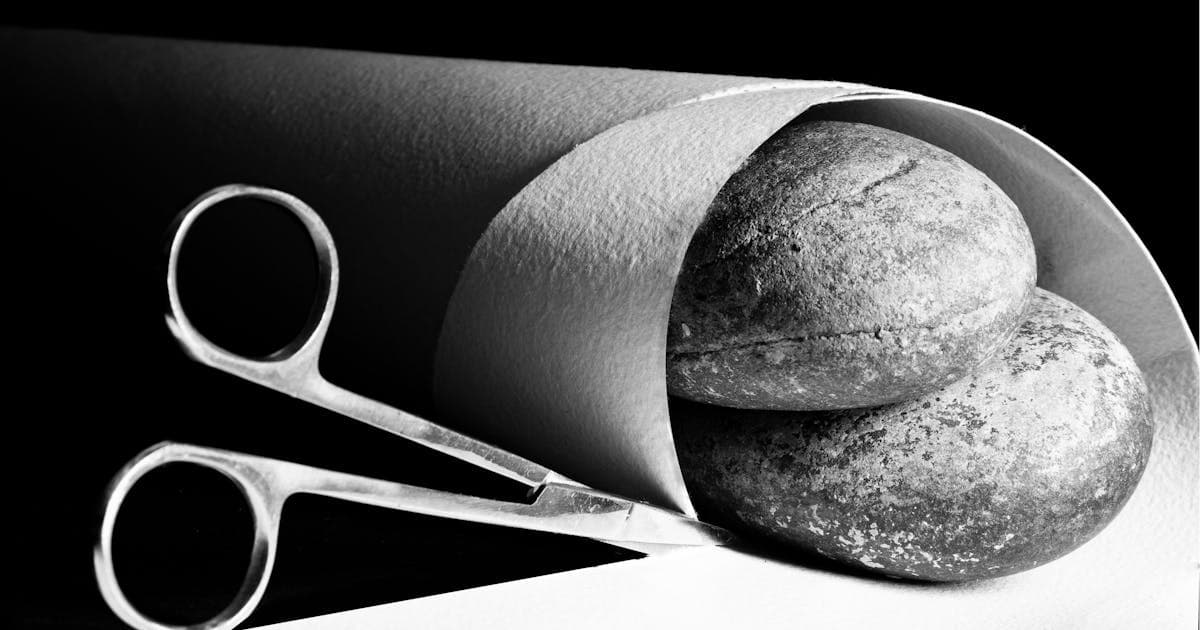
The Simplest Game That Nobody Can Figure Out
Rock Paper Scissors (abbreviated RPS, because we are busy people) is a hand game played between two people. You make a fist. You count to three. You throw one of three shapes. That's it. That's the whole thing. And yet somehow it has consumed the minds of scientists, athletes, and federal judges for centuries.
The three shapes:
- Rock (a closed fist, the gesture you were already making)
- Paper (a flat hand, the universal sign for "calm down")
- Scissors (two fingers out, like a peace sign that means war)
Rock crushes Scissors. Scissors cuts Paper. Paper covers Rock. If you both throw the same thing, you do it again, because the universe demands a winner.
How It Actually Works
Two people face each other. They pump their fists together, chanting "Rock… Paper… Scissors… Shoot!" On "Shoot," both reveal their chosen gesture. The whole exchange takes about three seconds, which makes it the fastest decision-making contest ever invented and also the reason your lunch order has been decided this way more times than you'd like to admit.
No equipment. No board. No cards. No Wi-Fi. Just two humans and three choices. It's the most democratic game in existence, and frankly, it's suspicious that something this simple actually works.
It's Not Just for Settling Who Rides Shotgun
Now, you might think of RPS as the thing you do when somebody has to take out the trash. And sure, it's that. But it's also a legitimate field of study in game theory, psychology, and human decision-making. Researchers at Zhejiang University and University College London have published actual peer-reviewed papers on this. With graphs. And p-values.
Since 2002, the World Rock Paper Scissors Association (WRPSA) has organized competitive tournaments with structured rules, certified referees, and world rankings. Professional players study opponents, exploit psychological patterns, and train their mental game the same way athletes train in any other sport. Except in this sport, your entire equipment list is "one hand."
Why It Matters (Seriously)
RPS shows up in places you would not expect:
- The courtroom: A U.S. federal judge once ordered lawyers to settle a dispute via RPS. This is a real thing that happened in the American justice system.
- The auction house: Christie's beat Sotheby's in an RPS match to win a $20 million art collection. An 11-year-old girl picked the winning throw.
- The laboratory: RPS is a model system for studying game theory, evolutionary biology, and artificial intelligence.
- The classroom: Teachers use RPS to teach probability, decision-making, and sportsmanship.
- The charity gala: RPS tournaments raise hundreds of thousands of dollars for good causes every year. By throwing hands. Charitably.
Known by Many Names, Loved Under All of Them
In Japan, it's Jan-ken (じゃんけん). In France, Pierre-feuille-ciseaux. In parts of the United States, it's called Roshambo, which sounds like a martial art but is, in fact, the same three-gesture game your grandma played. The rules are identical everywhere, which is either a testament to the game's elegance or proof that humans are just fundamentally unable to agree on names for things.
A Game That Refuses to Stay Simple
RPS has spawned variations (including the iconic Rock Paper Scissors Lizard Spock), appeared in movies, TV shows, and viral moments, and now lives online where millions play competitively against opponents around the world.
Whether you're settling who pays for dinner or competing for a world title, Rock Paper Scissors is the great equalizer. Anyone can win. The next throw is always a fresh start. And somewhere, right now, two people are counting to three and throwing hands, because some things really are that simple.