
Why Does Paper Beat Rock?
The single most asked question in all of Rock Paper Scissors. The answer is better than you think.
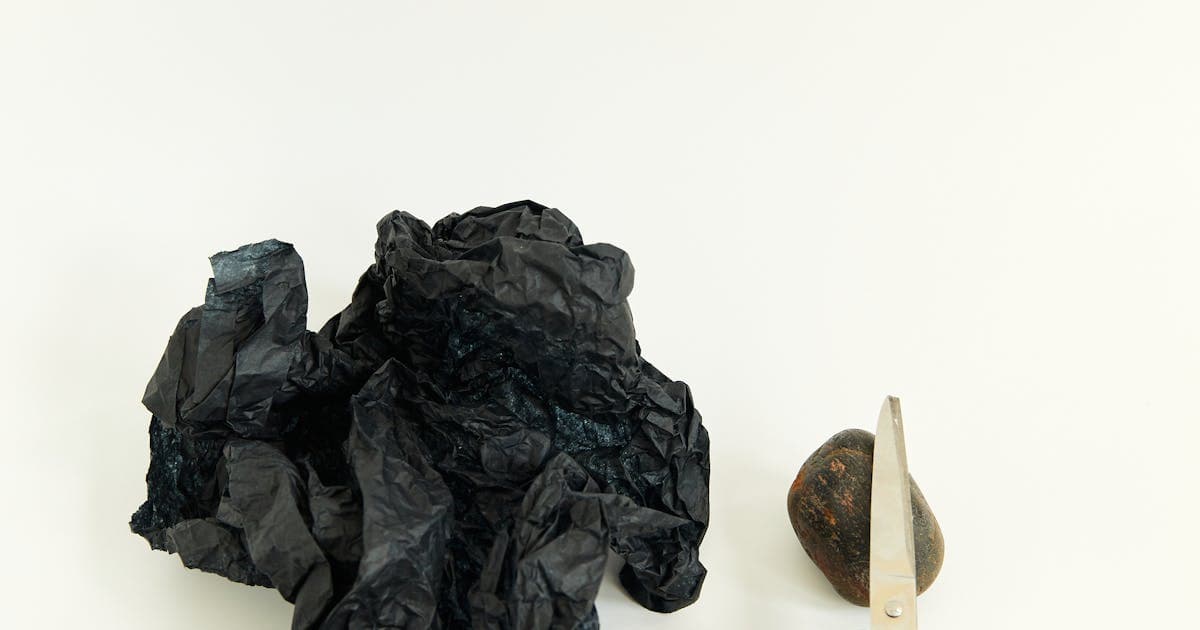
Let's Address the Elephant in the Room
"If I threw a rock at a piece of paper, the rock would win." You're right. Physically speaking, a rock absolutely destroys paper in every conceivable scenario. You could run this experiment a thousand times and paper would lose every single one. So why does the game say otherwise?
Great question. The answer involves ancient philosophy, clever game design, and the fact that Rock Paper Scissors was never meant to simulate an actual fight between office supplies and landscaping materials.
It's Not About Fighting. It's About Covering.
Rock Paper Scissors originated in China and evolved into its modern form in Japan (as Jan-ken). In that tradition, the three gestures aren't duking it out. They represent a cycle of dominance through containment.
Paper doesn't punch Rock. Paper covers Rock. It wraps it up, conceals it, renders it irrelevant. In Eastern philosophy, this reflects the idea that subtlety and intelligence can overcome brute force. It's the same principle behind every martial arts movie where the small, calm person beats the large, loud person. Which is all of them.
The Game Design Reason (a.k.a. The Math)
From a pure game theory perspective, it doesn't actually matter what beats what. What matters is that the cycle is non-transitive:
- A beats B
- B beats C
- C beats A
No single option dominates. Every choice wins, loses, and ties with equal probability. If Paper didn't beat Rock, you'd have a system where one option is always best, and choosing it every time would be the optimal strategy. That's not a game. That's just one guy winning forever. Nobody wants that.
The Historical Symbolism
The original Chinese version used different symbols: a general (Rock-like), a minister (Paper-like), and a snake (Scissors-like). The minister could overrule the general through bureaucratic authority. It wasn't about physical force. It was about who had the paperwork.
So Paper beating Rock is actually the most realistic part of the game. Anyone who's ever dealt with a city permit office already knows this.
Nature Agrees
Researchers studying game theory use RPS as a model for non-transitive relationships that appear throughout the natural world. Certain species of lizards, bacteria, and coral follow Rock-Paper-Scissors dominance hierarchies. The "paper beats rock" relationship isn't arbitrary. It mirrors real ecological dynamics where the "strongest" option doesn't always win.
So, to Sum Up
Paper beats Rock not because of physics, but because of symbolic logic and game balance. The game was designed to create fair competition, not to accurately simulate what happens when you put a sheet of paper on a boulder. And that's precisely what makes Rock Paper Scissors one of the most elegant games ever devised.
Ready to put this knowledge to extremely serious use? Learn the official rules or study advanced strategy. Your paper game will never be the same.